
 Write a review


 Sign up
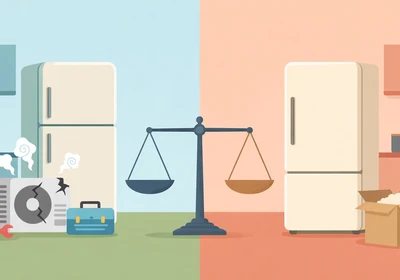
Repair or Replace Your Appliance? The Decision Guide That Actually Saves Money
The most expensive sentence in appliance ownership is "while you're here, just replace it." The second most expensive is "keep repairing it" on a …
A warm refrigerator is not a minor inconvenience — it's a clock on hundreds of dollars of food, a food-safety problem, and one of the highest-intent searches in all of home services. "Fridge not cooling," "freezer freezing but fridge warm," "refrigerator clicking," "ice maker not working": these are the queries that turn into same-day service calls.
This guide walks the whole path: how a fridge actually cools, symptom-by-symptom diagnosis you can do safely, what each common repair costs, sealed-system realities, icemaker and water issues, built-in and luxury brands, when to stop DIY, and how to hire the right tech. Pair it with the Appliance Repair Costs and Repair or Replace? guides in this series when you're at the money decision.
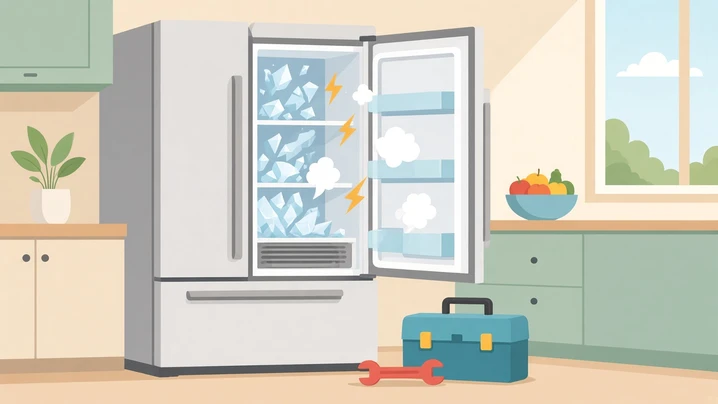
Every modern fridge is a sealed refrigeration loop plus fans, sensors, and a defrost system:
Knowing this stops the two most expensive mistakes homeowners make: paying for a "recharge" on a system that isn't low, and replacing a fridge when a $40 relay or a filthy condenser was the whole problem.
| Fridge warm, freezer OK / too cold | Evaporator fan, damper, control, or airflow blockage |
| Both warm; compressor hot / clicking | Start relay/capacitor, compressor, dirty condenser, failed condenser fan |
| Runs constantly, still warm | Dirty coils, low refrigerant/leak, bad door seals, overloaded cabinet |
| Heavy frost on back freezer wall | Defrost heater, defrost sensor, or control — not "needs Freon" |
| Water on floor / in crisper | Clogged defrost drain, bad door seal, cracked drain pan |
| Loud buzzing / vibrating | Fan blade interference, failing fan motor, compressor mounts |
| Icemaker dead / cubes taste bad | Water filter, inlet valve, icemaker module, frozen fill tube |
| Error codes on display | Model-specific — photograph them before resetting; they guide the tech |
If food is already above safe temps for more than a couple of hours, move perishables to a cooler with ice and treat the call as urgent — don't wait overnight "to see."
The relay helps the compressor start. A failed relay often clicks, fails to start, or starts intermittently. Parts are cheap; diagnosis is quick. If a tech jumps straight to "new compressor" without testing the relay and checking amp draw, get a second opinion.
Classic pattern: freezer still cold (it surrounds the evaporator), fresh-food section warm because air isn't being moved. Fan may squeal or sit silent when the freezer door switch is bypassed/held. Mid-range repair; very common on side-by-sides and French doors.
Compressor overheats, short-cycles, or cools poorly. Look for a fan near the compressor that should spin freely when powered. Dust + failed fan is a frequent summer failure.
Frost blankets the evaporator → airflow dies → warm fridge. The fix is heater, bi-metal/thermistor, or control — not a refrigerant top-off. Adaptive defrost boards fail too; don't accept "add Freon" as the first answer to visible frost block.
Wrong temperatures with a compressor that otherwise behaves point here. Boards are pricier; sensors are not. A good tech tests before ordering the expensive part.
Unsexy, cheap, and responsible for chronic warm spots and condensation. Leveling also matters: a fridge that leans forward won't seal.
Sealed system = compressor, evaporator, condenser, metering device, and the refrigerant charge. These are not DIY, and in the US they require EPA Section 608 certification.
Icemaker problems are annoying but rarely food-safety emergencies — don't pay emergency rates for cubes.
Built-in refrigerators (Sub-Zero, Thermador, Cove, some KitchenAid / JennAir) are a different trade:
| Diagnostic | $80–150 |
| Relay / capacitor | $120–280 |
| Fan motors | $150–400 |
| Defrost components | $180–450 |
| Icemaker module / valve | $150–450 |
| Gasket set | $100–250 |
| Sealed system | $500–1,800+ (luxury much higher) |
Full tables and quote strategy: The Complete Guide to Appliance Repair Costs.
Usually airflow: failed evaporator fan, stuck damper, blocked vents, or a frosted-over evaporator from a defrost fault. It's one of the most common patterns — and usually not a compressor.
Only if there's a confirmed leak and a proper sealed-system repair. Fridges are sealed; they don't consume refrigerant like a car "uses oil." A recharge without leak repair is a temporary bill.
Mass-market units commonly 10–15 years with maintenance; some last longer. Built-ins can run longer when serviced correctly — and cost more when they don't.
Yes for fans, relays, gaskets, and defrost parts. Sealed-system or major board jobs need the 50% rule against replacement cost. See the companion repair-vs-replace guide.
Often a start relay trying and failing to start the compressor, or a compressor in distress. Unplug if it's rapid-cycling hard, protect your food, and book diagnosis — continued clicking can finish a marginal compressor.
Yes if that unit holds safe temps. Coolers with ice work for short windows. Don't rely on a cooler overnight in a heat wave without replenishing ice.
Run the numbers: price of the plan vs likelihood of sealed-system failure after the manufacturer's compressor coverage. Mid-tier plans that exclude the failures you care about are worthless — read exclusions.
Food on the line? Find verified refrigerator repair technicians on GigoPro, compare recent reviews and response times, and send your model number with the booking so the right parts show up on the truck.
The most expensive sentence in appliance ownership is "while you're here, just replace it." The second most expensive is "keep repairing it" on a …

Laundry failures are the other great appliance emergency: a washer that won't drain floods the floor; a dryer that won't heat strands the househol…
"How much does appliance repair cost?" sounds simple. It isn't. A $35 service call that clears a jammed garbage disposal and a $1,800 sealed-syste…
When a pump hums and dies, a blower seizes, or a shop tool motor smokes, the fork is simple to say and hard to price: rewind/rebuild at a motor sh…
Comments
0 commentsTo add a comment you need to sign in.
No comments yet. Be the first!