
 Write a review


 Sign up

Repair or Replace Your Appliance? The Decision Guide That Actually Saves Money
The most expensive sentence in appliance ownership is "while you're here, just replace it." The second most expensive is "keep repairing it" on a …
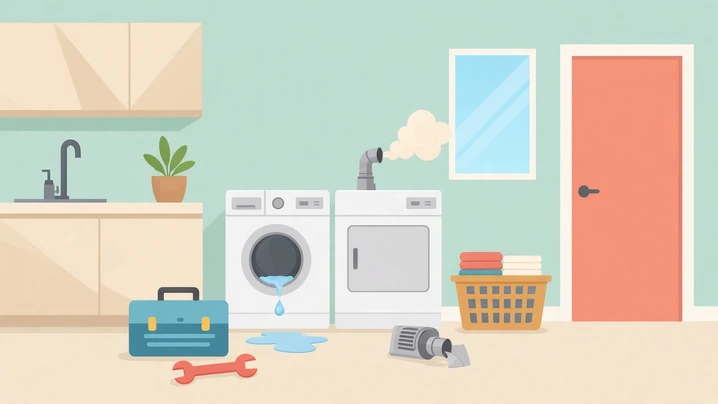
Laundry failures are the other great appliance emergency: a washer that won't drain floods the floor; a dryer that won't heat strands the household; a burning-lint smell is a fire problem, not a convenience problem. Search behavior matches the panic — "washer not spinning," "dryer not heating," "washing machine leaking," "dryer squealing" — high intent, local, often same-day.
This guide covers both machines end to end: symptom diagnosis, the repairs that actually show up on invoices, venting (the dryer issue that kills heating elements and houses), cost ranges, repair-vs-replace calls, and how to hire without paying for three wrong parts. It sits next to the Appliance Repair Costs and Repair or Replace? articles in the Appliances series.
| Won't power on / won't start | Power, lid switch/door lock, control, child lock |
| Fills then does nothing | Lid switch, door lock, shift actuator, control |
| Won't agitate | Coupler, clutch, actuator, drive belt, motor, transmission |
| Won't spin / stops full of water | Lid switch, drain pump, belt, rotor/stator (direct drive), control |
| Won't drain | Pump, clogged drain hose/coin trap, kinked standpipe |
| Leaks from front / bottom | Door boot (front-load), tub seal, hose clamps, overflow from oversuds |
| Loud bang / walk across floor | Unbalanced load, shock absorbers, suspension rods, bearings |
| Burning smell / error codes | Photograph codes; unplug if you smell wiring or hot electronics |
Top of the hit list. Symptoms: water left in the drum, drain error codes, humming without draining. Foreign objects (bra wires, coins, screws) kill pumps constantly — ask the tech what they found in the trap.
Cheap part, huge symptom list (no start, no spin). On front-loaders, a failed lock is more common than homeowners expect.
Top-load direct-drive Whirlpool-style machines often use a plastic coupler — a classic, affordable fix when the motor runs but the transmission doesn't. Belts on other designs squeal or snap. Shift actuators fail on many vertical-axis models (agitate/spin issues).
Random errors, dead displays, cycles that freeze mid-program. Boards are $250–550 installed territory — demand a real diagnosis, not board-swapping as a first guess.
Front-load rumble at spin usually means bearings (labor-heavy). Suspension rods and shocks handle bangs and walking. These jobs often cross the replace line on mid-life machines — get the age and replacement price in the same conversation.
The expensive top-load failure. If quoted, run repair-vs-replace immediately.
| Tumbles, no heat (electric) | Heating element, thermal fuse, thermostats, power (240V leg) |
| Tumbles, no heat (gas) | Igniter, flame sensor, gas valve coils, thermal fuse |
| No tumble / motor hums | Belt, idler, motor, seized drum bearings/rollers |
| Squeal / thump | Drum rollers, glides, idler pulley, worn belt |
| Takes forever / overheats | Clogged vent (first suspect), blown seal, failing airflow |
| Shuts off mid-cycle | Thermal fuse/high-limit from poor venting, moisture sensor, control |
Most common no-heat fix on electric dryers. Element open = no heat; shorted element can trip breakers. Always inspect venting when an element or fuse fails — heat failures and vent failures travel together.
Igniter should glow brightly and light within seconds. Weak/slow igniters are a staple gas-dryer repair. Valve coils fail with age (clicks, no flame). Gas work belongs to people who know gas — if you smell gas, stop, ventilate, and treat it as a utility/emergency issue.
The fuse is a one-shot safety. If it's open, something caused overheating — usually a restricted vent. Replacing the fuse without clearing the vent is buying a repeat visit.
Squeals, thumps, and "motor runs / drum doesn't" live here. A full roller/idler/belt kit is often smarter than replacing one tired roller.
Cycles that never end, or clothes that come out scorched on "auto," often need sensor cleaning (residue film) or sensor/control diagnosis. Wipe sensors with a bit of rubbing alcohol before you authorize a board.
Lint in a crushed, long, or foil-accordion vent is a leading cause of dryer fires and of repeat heating-part failures.
If a tech replaces a thermal fuse or element, ask them to evaluate the vent in the same visit. That one ask prevents the comeback failure.
| Diagnostic | $80–150 |
| Washer drain pump | $150–350 |
| Door lock / lid switch | $120–280 |
| Washer belt / coupler / actuator | $120–350 |
| Washer control board | $250–550 |
| Washer bearings / tub seal | $350–800 |
| Dryer heating element | $150–350 |
| Gas igniter / coils | $150–380 |
| Thermal fuse / thermostat | $100–250 |
| Belt / rollers / idler kit | $150–350 |
| Professional vent cleaning | $100–250 |
Regional spreads and quote tactics: The Complete Guide to Appliance Repair Costs. Compare laundry appliance pros in Houston and Miami.
Restricted venting until proven otherwise. The element is the victim; airflow is the crime. Clean or replace improper ducting before the next element.
Often maintenance: clean the boot, run cleaner cycles, leave the door open, check the drain filter. Persistent smell after that can mean a contaminated tub or boot that needs replacement.
Not usually first. Lid switch/door lock, drain faults, and out-of-balance logic kill spin constantly. Diagnosis before motor quotes.
Usually rollers/idler — annoying and progressive, not immediately a fire. Burning lint smell or scorch marks are the fire red flags — stop using the dryer and clear the vent.
Almost always no. Put the money toward a new machine with a warranty unless parts and labor are unusually cheap and the cabinet/condition are exceptional.
Accessible runs and the exterior flap: yes, with a vent brush. Long concealed runs, roof terminations, or crushed ducts: hire it. If dry times are bad, don't guess — measure airflow improvement after cleaning.
Independent techs handle most mid-ticket failures. For board-level issues still under manufacturer warranty, use authorized service. Confirm parts lead times when you book — some proprietary parts delay jobs.
Find washer and dryer repair specialists on GigoPro, compare ratings and response times, and book someone who will check the vent when your dryer "just needs a fuse."
The most expensive sentence in appliance ownership is "while you're here, just replace it." The second most expensive is "keep repairing it" on a …
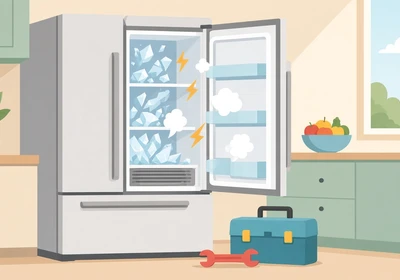
A warm refrigerator is not a minor inconvenience — it's a clock on hundreds of dollars of food, a food-safety problem, and one of the highest-inte…
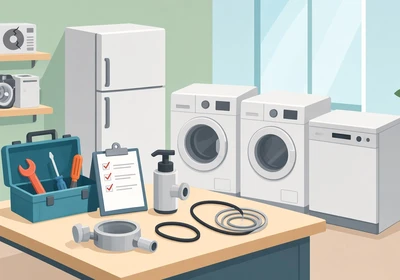
"How much does appliance repair cost?" sounds simple. It isn't. A $35 service call that clears a jammed garbage disposal and a $1,800 sealed-syste…
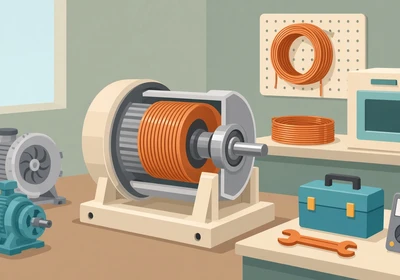
When a pump hums and dies, a blower seizes, or a shop tool motor smokes, the fork is simple to say and hard to price: rewind/rebuild at a motor sh…
Comments
0 commentsTo add a comment you need to sign in.
No comments yet. Be the first!