
 Write a review


 Sign up

Repair or Replace Your Appliance? The Decision Guide That Actually Saves Money
The most expensive sentence in appliance ownership is "while you're here, just replace it." The second most expensive is "keep repairing it" on a …
"How much does appliance repair cost?" sounds simple. It isn't. A $35 service call that clears a jammed garbage disposal and a $1,800 sealed-system job on a built-in refrigerator are both "appliance repairs." The price depends on the equipment, the failure mode, brand and parts availability, whether the tech is brand-authorized, your region, and whether the visit is same-day emergency or a scheduled weekday slot.
This guide gives you the full map: national price ranges by appliance and fault, how diagnostic fees and parts actually work, brand premiums (including Sub-Zero, Wolf, Miele, Viking), the repair-vs-replace math, the patterns that inflate quotes, and a repeatable process for getting honest estimates. Use it before you book — or while you're comparing three quotes on the kitchen counter.
Note: ranges below are typical US national figures for 2026. Your zip code, brand, and parts lead time will change the number — get written quotes for your specific model.
| Diagnostic / service call | $80–150 | Often credited toward approved repair |
| Thermostat / temperature control | $150–350 | Common "runs but won't hold temp" fix |
| Evaporator fan motor | $150–400 | Warm fridge, cold freezer — classic symptom |
| Condenser fan motor | $150–380 | Overheating compressor, weak cooling |
| Start relay / capacitor | $120–280 | Clicking, won't start, intermittent cooling |
| Defrost system (timer, heater, sensor) | $180–450 | Frost buildup, cycling oddly |
| Icemaker repair / replace | $150–450 | Module swap often cheaper than rebuild |
| Sealed system (compressor / leak / recharge) | $500–1,800+ | The repair-vs-replace decision point for most fridges |
| Built-in / luxury brand sealed work | $1,200–3,500+ | Sub-Zero, Thermador, etc. — specialist labor + OEM parts |
Deep dive: Refrigerator Repair: The Complete Homeowner's Guide (companion article in this Appliances series).
| Diagnostic | $80–150 | Same rules as fridge — ask about credit |
| Drain pump | $150–350 | Won't drain, error codes for drain fault |
| Door lock / lid switch | $120–280 | Won't start or stops mid-cycle |
| Drive belt / coupling | $120–300 | Motor runs, drum doesn't; loud squeal |
| Shift actuator / clutch (top-load) | $150–350 | Won't agitate or spin |
| Control board | $250–550 | Random errors, dead display, no cycle advance |
| Transmission / gearcase | $400–900 | Often crosses the replace line on mid-tier machines |
| Bearing / tub seal (front-load) | $350–800 | Loud rumble, leaks; labor-heavy |
| Heating element (electric) | $150–350 | Runs, doesn't heat — most common electric fix |
| Gas valve coils / igniter (gas) | $150–380 | Same symptom on gas units |
| Thermal fuse / thermostat | $100–250 | Often failed because of a clogged vent — fix both |
| Drum belt / rollers / idler | $150–350 | Squealing, thumping, drum won't turn |
| Moisture sensor / control | $120–320 | Over-dries or never ends cycle |
| Motor | $250–500 | Humming, won't start under load |
Companion: Washer & Dryer Repair: Diagnosis, Costs, and When to Call a Pro.
| Drain pump / chopper | $150–350 | Standing water, drain errors |
| Wash pump / motor | $200–450 | Quiet cycle, dirty dishes |
| Heating element | $150–320 | Dishes wet / poor sanitize |
| Inlet valve | $120–280 | No fill or overfill |
| Control board / UI | $200–500 | Dead buttons, stuck cycle |
| Door latch / seal | $100–250 | Leaks, won't start |
| Bake / broil element | $150–320 | One element dead, other works |
| Igniter (gas) | $150–350 | Weak glow, delayed ignition, gas odor risk — don't ignore |
| Surface burner / infinite switch | $100–280 | Per burner; switches add up |
| Oven control / ERC | $250–600 | Error codes, dead display, wrong temp |
| Microwave magnetron / diode | $150–400 | Often not worth it on cheap counters; built-ins differ |
| Dual-fuel / pro range specialty work | $300–1,200+ | Wolf, Viking, Thermador — brand-trained techs only |
| Vacuum motor / belt / brushroll | $60–200 | Specialty vacuum shops often beat big-box "replace it" |
| Small appliance (mixer, blender, iron) | $40–150 | Only worth it on premium tools (KitchenAid, commercial) |
| Electric motor rewind / rebuild | $150–600+ | Shop motors, pumps, fans — when OEM replacement is obsolete |
*National estimates, 2026. Labor rates and OEM parts availability dominate the spread. Compare techs in Houston and Los Angeles.
Almost every legitimate shop charges a trip/diagnostic fee. That fee covers drive time, model research, testing, and a written finding. The questions that separate fair shops from the rest:
A $0 "free estimate" that always ends in a high-pressure replacement pitch is not cheaper — it's a sales funnel. Prefer a clear diagnostic with credit.
OEM parts match the manufacturer's spec and usually carry a clearer warranty trail. Aftermarket can be fine on commodity parts (belts, some pumps) and risky on sealed-system components, electronic boards, and luxury brands. Ask what you're being quoted — and what warranty covers both parts and labor.
It's on a sticker inside the fridge door, behind the washer kickplate, or on the oven frame. Without it, every quote is a guess — and guesses skew high.
Use this before you approve anything over ~$300 (full framework in the companion Repair or Replace? guide):
Safe DIY: clean condenser coils, replace fridge water filters, clear dryer lint traps and accessible vent sections, level a washer, clean dishwasher filters, reset breakers, check that the outlet actually has power.
Stop there for: sealed-system refrigerant work, gas igniters you're not trained for, high-voltage microwave internals (capacitors hold a charge), control-board diagnosis on luxury brands, and anything that requires tipping a loaded fridge or unsealing a built-in. Budgets that ignore this line usually cost twice as much.
Yes. Diagnosis is skilled time. What's not okay is a fee that never credits toward the repair, or a "free" visit that exists only to sell a replacement. Ask about credit before anyone drives.
It requires EPA Section 608 certification, gauges, recovery equipment, brazing, vacuum, and correct refrigerant — plus the compressor or leak repair itself. Labor hours add up, and on older units the math often favors replacement.
Depends on the fault. A $160 lid switch: yes. A $700 transmission: usually no — put that money toward a new machine with a warranty. Run the 50% rule against installed replacement cost.
Not always on simple parts, but proprietary boards, direct-drive designs, and parts delays can raise both price and wait time. Confirm parts availability when you book.
Itemized labor, parts (OEM vs aftermarket), diagnostic credit, trip fees, tax, and warranty terms on parts and labor. One vague number is not an estimate.
Usually not — manufacturer warranties typically require authorized service. Check the warranty booklet before you book an independent shop.
Most US markets land around $30–120 for a standard weekday diagnostic, higher for evenings, weekends, and luxury brands. Always confirm credit-toward-repair policy.
When food is at risk (dead fridge/freezer), a leak is active, or a gas appliance smells wrong (evacuate first, call the utility). Laundry and dishwashers can usually wait for a fair weekday rate.
Browse verified appliance repair companies on GigoPro — filter by refrigerator, washer & dryer, and specialty shops, compare recent reviews, and get written estimates before you approve the work.
The most expensive sentence in appliance ownership is "while you're here, just replace it." The second most expensive is "keep repairing it" on a …

Laundry failures are the other great appliance emergency: a washer that won't drain floods the floor; a dryer that won't heat strands the househol…
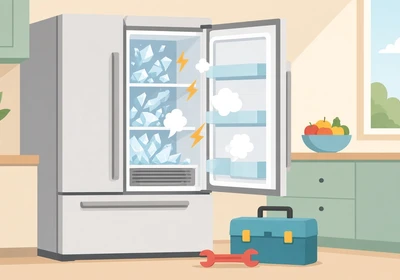
A warm refrigerator is not a minor inconvenience — it's a clock on hundreds of dollars of food, a food-safety problem, and one of the highest-inte…
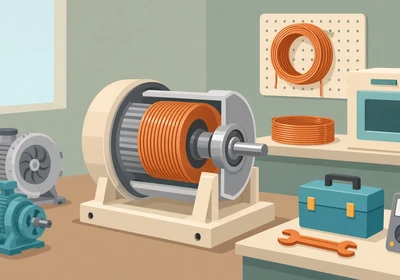
When a pump hums and dies, a blower seizes, or a shop tool motor smokes, the fork is simple to say and hard to price: rewind/rebuild at a motor sh…
Comments
0 commentsTo add a comment you need to sign in.
No comments yet. Be the first!